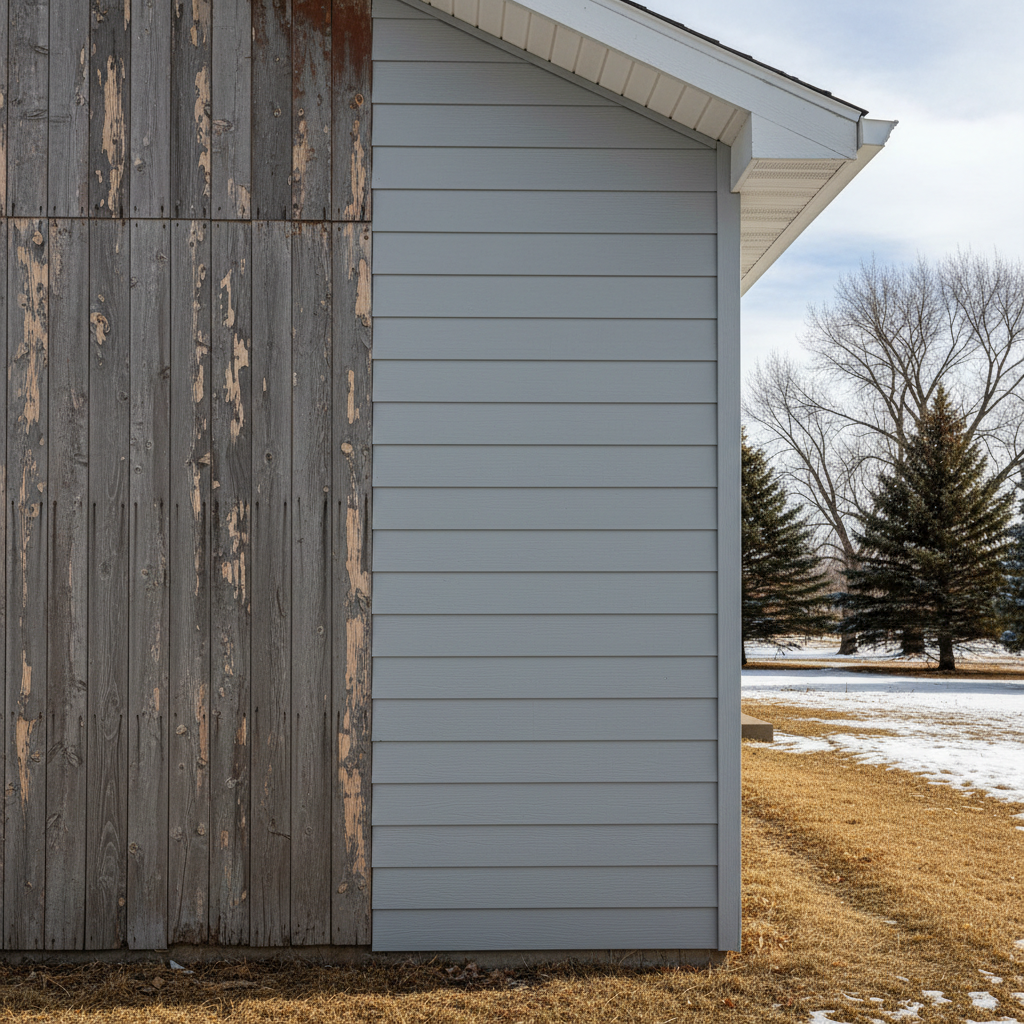
Alright, let's talk siding. Specifically, cement-based siding. You've probably heard of fiber cement, maybe even seen it on a lot of houses around Fargo. It's a solid choice, no doubt. But there's another option out there, EIFS, or Exterior Insulation and Finish Systems, that sometimes gets lumped in with 'stucco' or 'cement siding.' It's got a cement-like finish, but it's a whole different animal. Let's stack 'em up so you can figure out what's best for your place.
What's the Deal with Fiber Cement?
When I say fiber cement, most folks immediately think of James Hardie. And for good reason – they pretty much own the market. It's made from cement, sand, and cellulose fibers. It comes in planks, panels, and shingles, pre-primed or even pre-painted. It's designed to look like wood siding, often with a wood grain texture, but without the headaches of wood.
Pros of Fiber Cement:
- Durability: This stuff is tough. It stands up to hail, high winds, and our crazy temperature swings here in Fargo. It's also rot-resistant and doesn't attract pests. You won't see it warp or crack like wood can.
- Fire Resistance: It's non-combustible, which is a big plus for safety.
- Appearance: You get that classic look of lap siding, shakes, or vertical panels. It holds paint really well, so your color stays vibrant for years.
- Maintenance: Pretty low. A good wash every now and then to get rid of the dust and dirt is usually all it needs.
Cons of Fiber Cement:
- Cost: It's not the cheapest option upfront. Materials and installation can be more than vinyl, though less than some premium wood or stone.
- Installation: It's heavy. It requires specialized tools and a skilled crew to install it right. This isn't a DIY job unless you're a seasoned pro. If it's not installed perfectly, you can run into moisture issues.
- Weight: Because it's so heavy, your home's structure needs to be able to support it. Most modern homes are fine, but it's something to consider for older builds.
What About EIFS?
EIFS is a multi-layered exterior finish that provides insulation and a durable, decorative surface. It's not just a board you nail up. It typically consists of an insulation board (like expanded polystyrene foam), an adhesive, a base coat with a fiberglass mesh reinforcement, and then a finish coat that looks like stucco. It's often seen on commercial buildings, but it's gaining traction in residential.
Pros of EIFS:
- Insulation: This is EIFS's superpower. That foam board adds serious R-value to your walls. For a place like Fargo where we battle extreme cold, that's a huge benefit for your heating bills.
- Seamless Look: You get a smooth, continuous finish without seams, which can look really modern and clean. It's great for architectural flexibility.
- Moisture Resistance: When installed correctly, EIFS creates a fantastic barrier against water intrusion.
- Lightweight: Compared to fiber cement or traditional stucco, EIFS is much lighter.
Cons of EIFS:
- Durability (Impact): While tough against weather, EIFS can be more susceptible to impact damage (think a rogue baseball or a ladder leaning against it) than fiber cement. A puncture can compromise the system if not repaired quickly.
- Installation: This is critical. EIFS absolutely requires expert installation. If it's not done perfectly – especially the flashing and sealing around windows and doors – you can end up with severe moisture problems trapped behind the system, leading to rot and mold. This is why it got a bad rap years ago, but modern EIFS systems and installation practices have largely addressed these issues.
- Cost: Can be comparable to or even higher than fiber cement, especially for a high-quality, properly installed system.
- Repair: Repairs can be trickier to blend seamlessly than replacing a fiber cement plank.
My Take: Which One for Fargo?
Look, both are good products in the right situation. But for most homeowners in Fargo, given our climate and the typical residential construction here, I'm going to lean towards fiber cement siding.
Here's why:
- Proven Performance: Fiber cement has a long, established track record of handling our brutal winters, the spring thaws, and the occasional summer hailstorm without a fuss. It's incredibly stable.
- Moisture Management: While EIFS can be great for moisture control, the risk of improper installation leading to trapped moisture is a concern. With fiber cement, as long as it's installed correctly with proper house wrap and flashing, it's very forgiving and allows your walls to breathe. We've seen too many issues with poorly installed EIFS in the past, especially in older systems.
- Repairability: If a section gets damaged, it's generally easier and more straightforward to replace a few fiber cement planks than to repair an EIFS system and get a perfect match.
- Aesthetics: Many folks in our neighborhoods, from the older homes in Clara Barton to the newer builds out by Veterans Boulevard, prefer the classic look of lap siding that fiber cement mimics so well.
Now, don't get me wrong, EIFS has its place, especially if you're building a highly energy-efficient home with a specific modern aesthetic and you've got a top-tier, experienced EIFS contractor. The insulation benefits are undeniable.
But for the average Fargo homeowner looking for a durable, attractive, and relatively low-maintenance exterior that can take whatever Mother Nature throws at us, fiber cement is usually the safer, more reliable bet. It's why we at Fargo Siding Solutions often recommend it. It just works.
```